
Hey #203: Nervous System 101
How your nervous system runs your life — and what nervous system safety, dysregulation, and regulation really mean.

There’s a great emphasis on nervous system regulation whenever any kind of inner work is in the picture.
I, too, have been mentioning nervous system safety quite a lot.
So today, let’s dive deeper into understanding the nervous system, its safety and regulation.
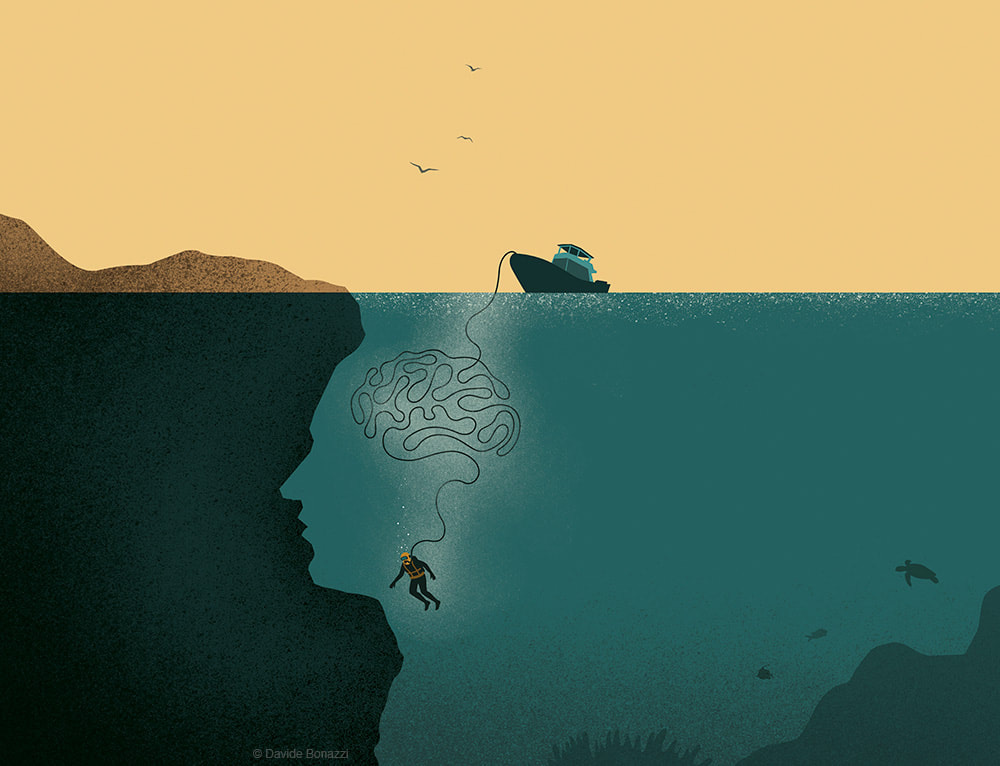
What is the nervous system and its dysregulation?
The nervous system is a complex communication network of the brain, spinal cord and nerves.
Without going into the anatomy of it, we can say…
The nervous system is like the hardware through which the software of the unconscious runs.
The unconscious?
It’s like a basement, multiple storeys below the ground. It’s dark and mostly inaccessible. Yet it holds all the small and big aspects of your life — your needs, memories, experiences, expectations, behaviors, fantasies, desires, pain, trauma, longings, anything and everything you can think of.
The decisions you think you make are driven by this unconscious. The wishes you find yourself stuck in, stem from this unconscious. The limiting behaviors you can’t make sense out of, come forth from this unconscious.
(The more you become aware of the unconscious, the more you make the unconscious conscious, and live a conscious life.)
In short, your unconscious holds everything that governs your life’s every single moment.
Data from the unconscious dictates the nervous system activity.
Let’s say..
Your unconscious holds the pattern that being rejected means being abandoned by others and left lonely (which is a threat to your emotional, and thus physical safety).
As a result, every time a situation emerges at your workplace where a slightest possibility of rejection exists, your nervous system would respond to keep you safe from the perceived threat of rejection.
The nervous system has two broad modes: one that prepares you to deal with danger (called the sympathetic nervous system), and another that helps you rest, recover, and return to balance (called the parasympathetic nervous system).
For self-preservation, the nervous system activates a set of survival responses. These are largely driven by the sympathetic branch of the nervous system, which prepares the body to deal with perceived danger.
The four common survival responses are:
Fight
Flight
Freeze
Fawn
Please remember: These responses aren’t flaws in your personality. They are intelligent survival strategies of the nervous system.
For instance, a healthy fight response can help you assert yourself and stand up against injustice. But when these responses are activated repeatedly without giving enough time for the parasympathetic system (responsible for rest and recovery) to take over, they can become excessive and lead to nervous system dysregulation.
Thus, rather than labeling these responses as “bad” or “wrong,” it helps to see them for what they truly are — your nervous system trying to protect you.
What do these four survival responses look like in action?
Using the previous example of “receiving rejection = abandonment”:
In the fight response, you’d overwork yourself to the point of burnout to ensure you don’t receive rejection. Or you’d become defensive, marching with all the emotional charge you can gather to assert your dominance on the person who could reject you. Simply put, unregulated fight mode leads to aggressive outbursts.
In the flight response, you’d stay away from the mere possibility of facing rejection. You’d avoid taking any responsibility for projects. And you’d come up with ironclad logic to downplay your skills and experience. All as an escape strategy.
In the freeze response, you’d feel an immense pressure to act yet your body won’t move. Your mind would shut down. You’d feel numb, hopeless, spaced out. To self-soothe, you may find yourself doomscrolling, binge-watching, binge-eating, etc.
In the fawn response, you’d get into a people-pleasing mode where you’d ensure your bosses have a great image of you so that even if rejection comes up, they’d side with you. You’d bend over backwards to keep everyone happy and receive their validation…at the cost of neglecting yourself.
You can find yourself operating with different survival responses in different moments.
The point is:
The unconscious mind is in the driving seat. And if something is registered as danger in your unconscious, your nervous system will follow the orders to keep you safe from that danger. Because it has only one mission: YOUR SURVIVAL AT ALL COST.
But here’s where things become interesting.
The nervous system doesn’t differentiate between real danger and learned/perceived danger.
This means many of the things stressing you today aren’t actual threats, but your system responds to them as if your survival depends on it. This is why…
When the nervous system repeatedly operates in fight, flight, freeze, or fawn mode, even when real danger isn’t present, and isn’t given enough time to rest and recover — it becomes dysregulated.
In the dysregulated state, the nervous system acts out of fear rather than safety.
So even when you may accomplish your goals, progress in life, actualize your desires, live the life you once dreamt of — acting with a dysregulated nervous system takes a toll.
Depending on the context, the signs of nervous system dysregulation can differ. Although, some of the common signs are:
A constant anxiety follows even when there’s nothing to be anxious about
Physical health is affected. From regular-yet-manageable digestive issues to diagnosed physical illnesses — the symptoms vary
Struggle to feel calm and joy in accomplishments and the process of achieving those accomplishments
Hypervigilance, an on-guard mode, difficulty to rest (no matter how much you want to rest)
Sweating, shallow breathing, racing heart, palpitations, fatigue, unexplainable restlessness
Disturbed sleeping and eating patterns
Extreme mood swings, self-isolation, numbness, hopelessness, overthinking, unending overwhelm
Brain fog, difficulty in concentration, memory loss
Anger outbursts, panic attacks, intense irritability
When these signs become unmanageable — aka your system can’t take it anymore — it crashes.
The inner resources are reallocated to major survival activities like eating, digestion, breathing, blood circulation, etc. No energy is left for activities like taking bath, cooking, having fun, going out, talking to people, listening to songs, focusing on work, dressing well, etc.
“I’m not able to do the most basic things. What’s wrong with me?” is the common question in this burnout state.
The answer is:
There’s nothing wrong with you. Your nervous system is burnt out. Still it’s doing what it knows best — ensuring your survival through intelligent energy reallocation.
Seeing yourself different from your nervous system is the first step to get out of such an extreme burnout (aka nervous system dysregulation).
What is nervous system safety and nervous system regulation?
Nervous system regulation is the process of bringing the nervous system to a state where it acts out of safety, not out of fear.
In other words, nervous system regulation is all about making the nervous system safe.
This essentially means changing the software which is making the hardware act out of fear.
That is:
Diving into the unconscious — identifying the deep-seated patterns, rewiring them, integrating them back to safety.
However, nervous system regulation also means staying with the body, instead of the mind. Because the mind fuels stress responses through its stories and conditioning.
Meaning:
Whatever the response arises due to nervous system dysregulation, you stay with it instead of running away from it.
Different regulation techniques are used for this.
The core of these techniques is — creating distance from the mind. So, the more you drop into the body, the more regulation you experience.
As you connect more with the body, you also begin to realize:
The nervous system stores unprocessed stress responses.
For instance: If you felt anger towards someone, but shut it down by distracting yourself through partying — it continues to linger in your body. Just because you’re trying to ignore what happened, doesn’t guarantee the anger is processed and released from your system.
Like an important but unfinished project, that suppressed anger can cause stress to the nervous system. For the nervous system to return to a rested, grounded and unburdened state, its priority is to process what’s unprocessed, and express what’s suppressed. The more this processing is delayed, the more of a threat it becomes to the nervous system, making it dysregulated.
As a result, ANY outlet (regardless of timing, context, rationality) is leveraged as an opportunity to process and release the stored anger. This can show up as disproportionate and exaggerated reactions to tiniest triggers (aka fight mode), without having any conscious understanding of it.
Also, the unprocessed responses fuels unchecked storylines and beliefs in the unconscious.
If your anger was the result of an unchecked unconscious belief of “When my choices are questioned, it means I’m being criticized” — the unprocessed anger will only aggravate this belief. Next time, whenever your choices are questioned, your mind will use the last instance of anger to justify how you’re indeed being insulted, and that you must retaliate to protect yourself (furthermore aggravating the fight mode and dysregulating the nervous system).
This is why…
Through nervous system regulation, we:
identify and rewire the unconscious patterns, and
process, release and express the unfinished stress responses
…so that the nervous system comes back to safety.
Some of the nervous system regulation techniques:
Breathing with awareness
Grounding in nature
Cold water exposure
Prioritising sleep and proper hydration
Body movements (anything from gentle sideways movements to intense workouts)
Talking to inner child
Humming
Scanning body sensations
Focusing on the noises in the surrounding
Staring at one point on the wall
Physical contact with self (gently tapping the chest, rubbing arms, massaging feet)
Crying
Heart centered meditation
Reconnecting with joy
It’s crucial to note that…
Observation is the precursor to every nervous system regulation technique.
If you can’t observe and identify that your nervous system is dysregulated (due to which you’re behaving a certain way in the first place), you won’t be able to use these techniques.
So, learn to observe the signs of the nervous system dysregulation (as mentioned in the last section).
A misconception
A common misconception is that practicing nervous system regulation techniques alone can keep the nervous system sustainably regulated.
It’s like continuing to upgrade the hardware without cleaning the virus from the software.The system may function well for some time, but sooner or later it crashes. Because the virus in the software hasn’t been addressed.
Hence, the inner work of rewiring the unconscious is a must for any sustainable shifts in the nervous system.
I frequently come across people who diligently practice nervous system regulation techniques, yet struggle to find lasting stability.
The moment a challenging situation arises, the techniques stop working and the nervous system slips back into fight, flight, freeze, or fawn. Seeing this, they try to practice the techniques even harder. But nothing changes.
Simply because the software cannot be upgraded by upgrading the hardware.
When the deeper work of rewiring the unconscious begins, something interesting happens. You realise that you no longer need to rely on nervous system regulation techniques as much as you once did.
They stop being a crutch. Instead, they become a conscious, thoughtful, and committed part of your everyday life. As a result:
The calm and relaxation which you were direly seeking, comes finding you. You begin to act out of safety and steadiness, instead of fear. It doesn’t mean fear no longer arises. It does. Inevitably. But you don’t get derailed by it. You become capable of regulating your nervous system, despite fear.
The inner conflicts are put to rest. Because the part which was not letting you move towards your goals finally realize that it’s safe in moving. The more it realizes, the faster it moves. As a result, even small inputs start bringing big outcomes. Because nothing is acting against you, but with you. Money follows. Success builds up. Relationships get better. Health improves.
Your self-sabotaging behaviors, old conditioning still try to interfere, but now you don’t judge them. Instead, you can see the protection which they’re trying to achieve. And just like that — with compassion you let them go.
And much much more.
Parting note
Your nervous system does not care about your success, growth, progress, wishes, dreams, goals, strategies, techniques, shortcuts, intentions, visions, skills, potential, or commitments.
It only cares about your survival.
The more you teach your nervous system to find safety in the different shades and hues of life, and reassuring it that survival is not under threat — the more its capacity expands.
THIS expanded capacity allows you to live the life you want.
Nothing else.
Until next time.
Your Transformation Coach,